What Teens Actually Experience in Wilderness Therapy: Findings from 148 Teens About Their Own Experiences
When parents start researching wilderness therapy programs, the questions can feel endless: Is it safe? Does it actually work? How does it work? How much does it cost?
Those questions matter, and luckily, there is high-quality research on the safety of wilderness therapy programs and the evidence for their effectiveness, making questions like these easier to answer with data.
But they’re not the only questions that keep parents up at night.
Qualitative questions like these are often harder to find answers to: What will my teen actually think about this experience? What will they talk about with their therapist? What will a typical day feel like for them? Will they feel abandoned? Will they shut down, resist, or go through the motions without ever really engaging?
The good news is that the guessing doesn’t have to happen in a vacuum anymore. Below is a deep dive into what 150+ teens actually say about their experiences during wilderness therapy programs — drawn from a meta-analysis of program studies and testimonials from real Second Nature alumni families. Plus, get an inside look at what daily life at Second Nature typically looks like.
The Study: 148 Teens, Open Questions, Honest Answers
Most wilderness therapy research measures clinical outcomes — behavior differences, changes in symptom severity, and family-reported progress. That evidence is substantial, and if that’s the question you’re starting with, Does Wilderness Therapy Work? covers it in depth.
In 2019, researchers Nicole Harper, A.J. Mott, and P. Obebe published a study, Client perspectives on wilderness therapy as a component of adolescent residential treatment, that looked beyond the behavioral outcomes and to the core of the student experience.
They surveyed 148 clients ages 13 to 19 immediately after completing a six-to-nine-week program — not parents, not clinicians. The teens themselves, answering open-ended questions on paper, in their own words: What was this like? What changed you? What would you tell someone who was about to start?
Six major themes emerged.
Theme 1: The People Mattered More Than the Place
Researchers had expected teens to point to nature — the peacefulness, the time for reflection — as the primary catalyst for change. That’s what most wilderness therapy theory emphasizes. While the wilderness setting did play a role in creating an environment for change, the “social and adventure factors — rather than nature — were identified by the clients as [the primary] catalysts for change.”
It was the group. The peer connections forged through shared struggles. The experience of being genuinely seen by people who had no prior history with you — no old stories, no predetermined role, no social hierarchy carried over from school or home — that teens identified as making all the difference.
For many teens, this was the first time they’d existed in a peer group where they weren’t already defined by things outside of their control.
This matters for parents who worry their teen will feel isolated. The research suggests the opposite is more common: teens find unexpected community in wilderness therapy programs.
At Second Nature, the community support among peers, therapists, and field staff isn’t accidental. Groups are intentionally structured (typically six to eight students, grouped by age, clinical presentations and gender) and stay together throughout the program with consistent field staff and clinical team. That’s the structure behind Second Nature’s wilderness therapy programs for teens. The conditions that the research says drive the most change are engineered into the Second Nature program from day one.
“I learned so much from [my therapist] and staff and other students. I am finally myself after years and years of mimicking and putting on a mask. I used to piece my personality together like broken glass, but no longer do I do that. Second Nature is the second home I never expected.”
Theme 2: The Environment Removes the Pressure
The second theme that emerged from the research was teens’ relationship to the outdoor setting itself — and it was more nuanced than “nature is calming.”
What teens consistently described in the study was the removal from their previous environment as significant. Not wilderness in an aesthetic sense, but the absence of what had been making everything harder: screens, social media, the social hierarchy of school, the conflict patterns that had calcified at home.
The clinical logic is straightforward. A teen struggling with anxiety is not anxious in a vacuum. They’re anxious in a specific environment, surrounded by specific triggers and relationships. When you remove or change the environment — the phone, the school, the social dynamics that felt inescapable — anxiety often drops. Not because it’s cured, but because the pressure is genuinely relieved. That relief creates space: for a different kind of conversation with a therapist, for noticing what’s underneath when the triggers are gone, for practicing new responses before returning to the old environment.
But nature doesn’t just relieve pressure. It removes the escape routes, too. Without screens, familiar social hierarchies, or the avoidance strategies your teen has refined over years, the patterns that brought them here surface in real time. Teens begin to recognize how they handle discomfort, respond to peers, and meet challenges in new ways: A fire either lights or it doesn’t. Teens who’ve learned to talk their way through a therapy session, say the right things, and wait it out find that the same tools don’t work here. That inability to manage the room instead of actually being in it is what allows the real work to begin.
Residential treatment removes some of the same triggers — the phone, the school, the home environment. But these spaces are familiar enough for teens to adapt. A new social hierarchy forms. New ways to manage impressions emerge. A hard group session ends and the teen goes back to their room. The escape routes change shape, but they don’t disappear.
Nature doesn’t offer the same workarounds. You can’t “perform” your way through a hike or negotiate with the weather. There’s no room to retreat to, no screen to fill the silence. The environment is uncontrollable, unimpressed, and indifferent to performance, which is exactly what enhances the therapeutic experience.
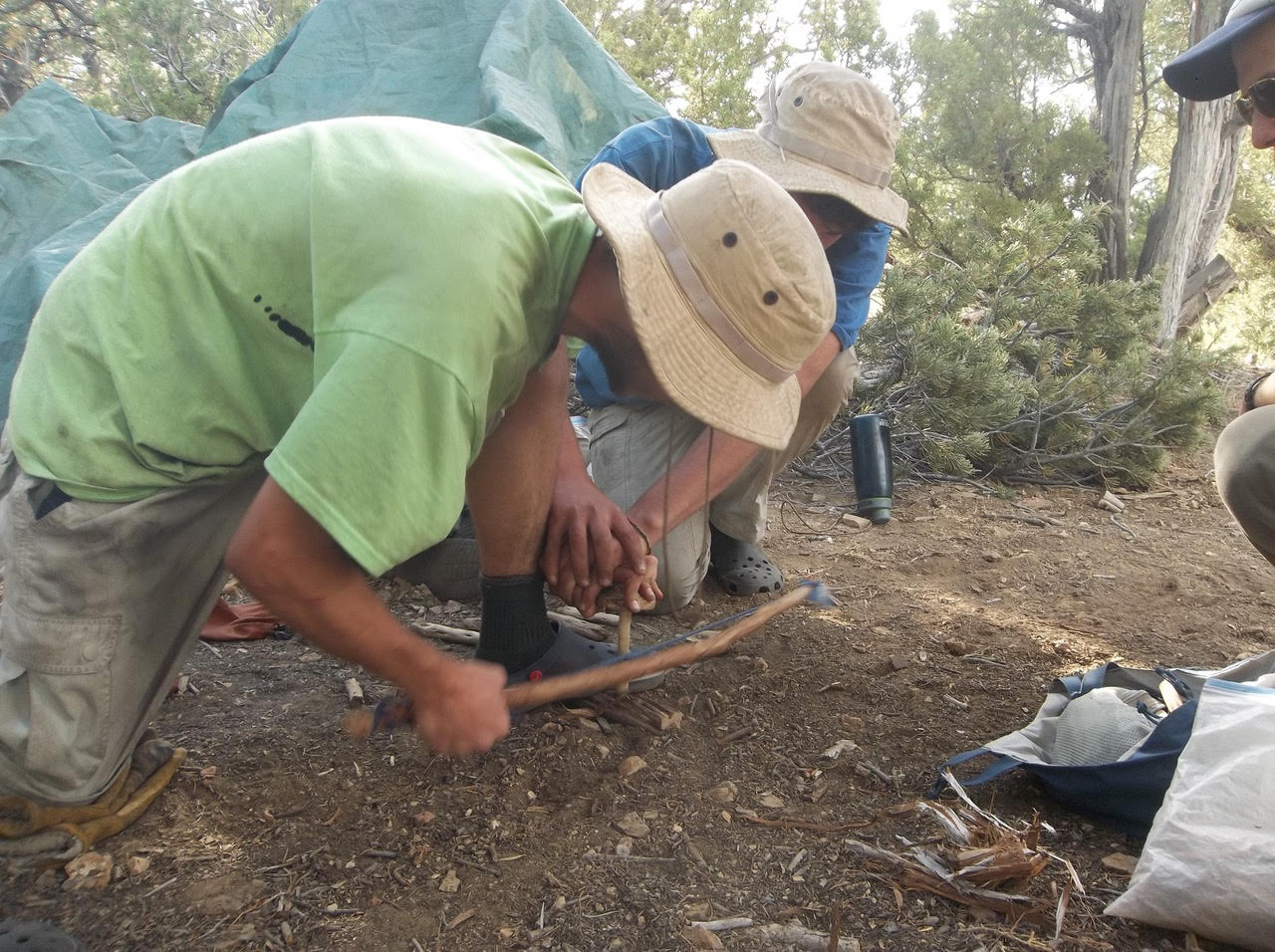
What makes Second Nature’s model distinct is that the clinical work doesn’t happen alongside the outdoor experience. It happens inside it. Therapists work in the field with instructors, translating experiential moments — the success of building a campfire, the group conflict, the instant a teen accomplishes something they arrived believing they couldn’t — into clinical insight in real time. The bow-drill isn’t a metaphor explained in an office afterward; it’s a lived experience of patience, persistence, and earned competence, decoded by the therapist who was standing there. That sequence of challenge, experience, and insight produces change that lands differently than insights uncovered in talk therapy alone. Teens internalize it because they felt it first.
Theme 3: The Shift Happens — But Not on Day One
“The hikes were physical and the daily therapy sessions were mentally overwhelming. But then something clicked. Realizing my life depended on it, I bought-in. I endured, persevered, and gave everything I had. Through both my failures and eventual successes, I began to find the worth and self-esteem I’d been missing.”
– Second Nature Alumni Student, Excerpt from College Essay (May 2024)
When teens in the study described the moment things changed, it was rarely dramatic. It was usually a small thing: completing something they thought they couldn’t, saying something honest in group they’d never said aloud, watching another teen struggle with something they recognized in themselves.
The pattern the research documents is consistent: early resistance, followed usually in the third or fourth week by genuine engagement. Not because anyone forced it, but because the environment made continued resistance more work than showing up honestly.
For teens who have spent months or years protecting themselves behind performance — at home, at school, in weekly therapy sessions — this progression is both predictable and meaningful. The wilderness setting compresses it. There’s no weekly reset. The same small group is there every morning, and eventually, something real surfaces.
This is what Second Nature’s clinical team is trained for. Early resistance isn’t a sign that the program isn’t working. It’s the beginning of the breakthrough.
Theme 4: They Come Home With Real Skills
The teens in the study described transferable social and life skills that they gained during the wilderness therapy program, in addition to the behavioral and emotional skills.
Practical skills like fire-building, navigation, shelter construction, and meal preparation showed up repeatedly as meaningful. Not because learning to make a fire is inherently therapeutic, but because the process of learning something from scratch, failing, trying again, and eventually succeeding produces a real experience of competence that transfers to other areas of life.
Clinical skills appeared alongside the practical ones: emotional regulation strategies they learned to apply in the field, communication patterns that felt genuinely new, conflict resolution approaches that were tested in real-time group dynamics rather than practiced in a hypothetical exercise.
This is the distinction between therapy as a concept and therapy as a practice. In a weekly office session, a teen can learn that taking a pause before reacting is useful. In a wilderness therapy program, they have dozens of opportunities per week to actually practice it — and to see what happens when they do and don’t.
“[Second Nature] was extremely helpful in realizing my problems and working through them. I feel so excited to practice these life skills because I am more confident and I just value myself more now. In other words, it was empowering and enlightening. I am now on the road to success.”
Theme 5: Developing Self-Concept and Seeing Themselves Differently
Across the 148 participants, changes in self-concept were among the most consistently reported outcomes.
Teens who arrived identifying themselves primarily through their “failures” (the failing grade, the expulsion, the family conflict, the diagnosis) described leaving with a more complex and more accurate picture of who they were. Not because anyone told them they were capable, but because they had experienced their own capability first-hand.
There’s a clinical reason this matters. Depression and anxiety both narrow self-concept. They collapse the range of how a person sees themselves and what they believe they’re capable of. Interrupting that pattern requires experiences that contradict it. Wilderness therapy provides those experiences in density and in sequence, over weeks rather than in isolated moments.
Additionally, a 2022 WSIPP systematic review of 88 wilderness therapy studies found that self-concept was one of the most consistently improved outcomes across youth participants, alongside behavioral improvements and reduced clinical symptoms. The Harper study adds the dimension that explains why: teens experienced themselves as capable, connected, and honest in ways they hadn’t before.
“I worked really hard to find out who I was, and I did better than I planned. I plan on coming back to Second Nature when I am older and becoming a strong, assertive, helpful staff member.”
Theme 6: Physical and Emotional Health Work Together
The final theme surprised even the researchers: teens described the physical experience of wilderness therapy — the hiking, the exertion, the outdoor living — as connected to their emotional and psychological experience in ways they hadn’t expected.
Sleep improved. Appetite regulated. The relationship between physical and mental health, well-established in clinical literature but difficult to leverage in a traditional therapeutic setting, became viscerally apparent, even to the teens themselves.
For teens whose mental health challenges are intertwined with sedentary behavior, disrupted sleep, poor nutrition, or substance use, restoring physical health isn’t a side effect of clinical recovery — it’s part of it. That’s built into how Second Nature structures the daily experience, not added on top of it.
A Day in the Life: What This Looks Like at Second Nature
Understanding what teens experience emotionally is one thing. Understanding what 3 PM on a Tuesday looks like is another.
Students wake early, cook their own meals collaboratively with staff over a fire they built and maintain themselves, and open each day with a mindfulness practice and group check-in. The practical responsibilities aren’t filler — they’re the first layer of structure, and the first daily opportunity to contribute to something that matters to the group.
From there, the group begins hiking through the backcountry of northeastern Utah’s canyon country — real terrain, real physical challenge, real sense of accomplishment at the end of the day. Packs are carefully weighted for each student’s size and note that most of our students arrive with little to no outdoor experience or regular exercise routine. That is exactly who our program is designed for.
Hiking and navigation happen alongside therapeutic journaling, skill progressions (fire-making, shelter construction, wilderness navigation), and clinical assignments tied to each student’s individual treatment plan. Field instructors are present around the clock. Therapists join the group in the field multiple days per week.
Therapy happens in the field, not in an office. Group sessions and individual sessions both take place in the environment students are actually living in — which means the clinical material is drawn from what’s happening in real time, not reconstructed from memory. The peer group that traveled together, cooked together, and navigated a hard stretch of terrain together is the same group sitting in therapy. That’s not a coincidence. It’s the design.
Family therapy begins in the first week — not as an afterthought, but from the start. What Second Nature has seen across 10,000+ families over 25+ years lines up with what the research shows: a teen’s environment after discharge determines whether the gains hold. Families work with therapists throughout the program so they’re not playing catch-up when their teen comes home.
Evenings are slower. Groups process the day together, students write letters to family, there is laughter and fun and games, and there’s time under the sky that most teens haven’t had since childhood — the kind of quiet that doesn’t have a notification attached to it.
What to Expect in the First Weeks
Parents often ask whether their teen will actually engage with the process — or spend six to eight weeks waiting it out.
Initial resistance is common, expected, and well documented in the research. Some teens are vocal about their anger. Some withdraw completely. Others test limits or try to make themselves invisible to the process. Most arrive unsure if they can trust the adults around them, and many assume no one really understands what they are going through.
The clinical and field teams at Second Nature are trained for this stage of the process. The program is not built around forcing immediate emotional buy-in during the first week. Instead, it relies on something more gradual and often more effective: consistent relationships, predictable structure, and a peer group made up of other students who have often stood in the exact same place emotionally only days or weeks earlier.
Therapeutic rapport develops through daily shared experiences. Staff are present around the clock, not just in formal therapy sessions, but while hiking, cooking meals, setting up camp, solving problems, and navigating difficult moments in real time. Over time, students begin to experience adults responding with consistency rather than escalation or judgment. At the same time, newer students often start connecting with peers who understand the fear, skepticism, anger, or hopelessness they arrived with because they recently felt it themselves.
Research and clinical experience consistently show that when distractions and avoidance strategies decrease, and supportive relationships remain steady, it becomes progressively harder to maintain a performance and easier for students to become more willing, honest, and emotionally engaged in the work.
By week three or four, most parents notice something different. Not an outright transformation, but certainly a shift. A moment of honesty in a letter that wasn’t there before. A description of something that went well. An acknowledgment, however small, that something is changing. That’s the progression the Harper study documented, and the one Second Nature has seen play out across more than 10,000 families.
If you have questions about what your teen’s experience would look like — week by week, day by day — Second Nature’s admissions team can walk you through it in detail.
Call (877)701-7600 or schedule a free consultation with our admissions team. There’s no pressure and no sales script. Just a real conversation.
Frequently Asked Questions
What do teens actually think about wilderness therapy?
A 2019 study of 148 teen wilderness therapy clients found that social dynamics and shared challenge were the primary catalysts for change — not just the nature alone. Most teens describe the peer connections they formed as meaningful and unexpected, and most report changes in how they see themselves and what they believe they’re capable of.
Will my teen hate it?
Initial resistance is common. The Harper et al. (2019) research documents it. Most teens move through early resistance into genuine engagement within the first few weeks, as the environment provides structure and relationship in ways that make it feel safer to show up honestly.
What skills do teens come home with?
The research identifies both practical skills (fire-building, navigation, outdoor survival) and clinical skills (emotional regulation, communication strategies, conflict resolution). Teens in the study consistently described skills that transferred into their lives after the program.
Does the peer group actually matter?
According to the Harper et al. (2019) research, it’s the primary mechanism of change. The peer group — forged through shared challenge in an environment with no prior social history — creates conditions for genuine connection and identity development that most teens haven’t encountered before.
What happens when my teen comes home?
The research supports the importance of aftercare and family therapy in sustaining gains. At Second Nature, family therapy runs throughout the program — not just at the end — so families are changing alongside their teen. Aftercare planning begins early in the program so the transition home is supported, not abrupt.
Sources:
- Harper, N.J., Mott, A.J., & Obebe, P. (2019). Client perspectives on wilderness therapy as a component of adolescent residential treatment for problematic substance use and mental health issues. Children and Youth Services Review, 105.
- Cramer, J. & Wanner, P. (2022). Wilderness Therapy Programs: A Systematic Review of Research. Washington State Institute for Public Policy.
- Gass, M. et al. (2019). UNH Research Finds Wilderness Therapy More Effective and Less Expensive. University of New Hampshire Today.
Posted in Wilderness Therapy Experience
More Blog Posts
The History of Wilderness Therapy: From Troubled Teen Programs to Regulated Clinical Practice
Does Wilderness Therapy Work?: What Years of Scientific Research Tell Us About the Efficacy of Wilderness Therapy Programs