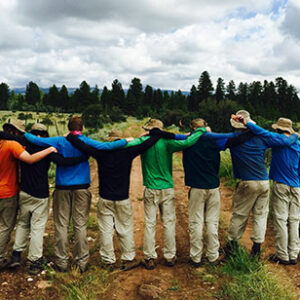
Does Wilderness Therapy Work?: What Years of Scientific Research Tell Us About the Efficacy of Wilderness Therapy Programs
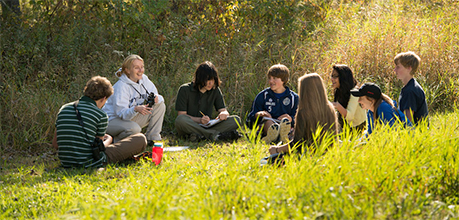
Most parents arrive at the topic of wilderness therapy for similar reasons: all other options have been exhausted.
The question at this point isn’t exploratory or casual, it has become urgent. Does wilderness therapy actually work?
Hearing first-hand accounts from families who have been through the process can certainly help, but relying solely on unverified Google reviews and Reddit forums will never provide a fully accurate answer to this significant question.
Scientific research analyses. Empirical data derived from controlled studies. Vetted sources. These are the things that deliver a much more transparent and comprehensive answer to every question parents have about the efficacy and impact of wilderness therapy programs.
The following article summarizes the key methods, findings, and limitations of 200+ wilderness therapy program studies conducted over the last 30 years by a variety of researchers.
What the Research Found
The Impact of Wilderness Therapy on At-Risk Youth: A Meta-Analysis of 11 Key Studies and 1,874 Young People
In 2022, researchers Natalie Beck and Jennifer Wong of Simon Fraser University published A Meta-Analysis of the Effects of Wilderness Therapy on Delinquent Behaviors Among Youth — one of the most rigorous quantitative reviews of wilderness therapy to date.
The analysis conducted by Beck & Wong (2022) involved the systematic review of studies from 1990 to 2020, screened 189 potential sources, and ultimately analyzed 11 key studies involving a variety of wilderness therapy programs and 1,874 young people ages 11 to 26.
Their conclusion:
“Pooled analyses yielded large, positive, and significant effects of 0.832 and 1.054, respectively, indicating that wilderness therapy is potentially an effective tool for addressing delinquent [problematic] behaviors among youth.”
In research terms, an effect size above 0.8 is considered “large” and “significant.” Both measures, one based on what young people reported about themselves, and one based on what caregivers observed, landed in that range. That’s not a marginal finding. That’s meaningful evidence.
77% of Youth Studies Showed Improved Outcomes: A Systematic Review of 88 Wilderness Therapy Studies
Also in 2022, the Washington State Institute for Public Policy (WSIPP) released Wilderness Therapy Programs: A Systematic Review of Research, which involved the analysis of 88 wilderness therapy studies for both youth and adults — another one of the most comprehensive summaries of this literature to date.
Across the 48 studies evaluating wilderness therapy programs for youth, specifically:
- 77% reported improved outcomes — including behavioral changes, reduced symptoms of depression and anxiety, and improved self-concept
- 17% reported mixed results — some measures improved, others didn’t change
- 6% reported no change
- No studies reported statistically significant negative effects
That last point matters. One of the most common fears parents carry into this research is: could this make things worse? Based on the 88 studies reviewed, no researchers found that wilderness therapy programs resulted in any statistically significant negative effects.
The WSIPP (2022) team also noted something important about which programs produced the strongest outcomes. According to the research, not all wilderness therapy programs are comparable, and the quality of a program is the number one indicator of its effectiveness. To see how these clinical standards apply in practice, here’s an overview of Second Nature’s wilderness therapy program for teens.
Wilderness Therapy Outperforms Traditional Treatment — At Lower Cost
A 2019 University of New Hampshire study, The Value of Outdoor Behavioral Healthcare for Adolescent Substance Users with Comorbid Conditions, led by Professor Michael Gass compared outdoor behavioral healthcare (OBH) to traditional treatment-as-usual (TAU) for adolescents ages 13–17 struggling with co-occurring substance use and mental health challenges.
The results were notable:
- Completion rate: 94% for OBH vs. 37% for traditional treatment
- Outcomes at one year: OBH participants showed approximately three times greater improvement compared to TAU participants
- Cost per 90-day treatment: $27,426 (OBH) vs. $31,113 (TAU) — a savings of roughly $17,000 per participant when adjusted
The completion rate difference is worth pausing on. When teens don’t complete treatment, the clinical investment is lost. A program that keeps 94% of participants engaged through the full course of treatment is doing something measurably different from one that retains only 37%.
Why Program Quality Is Everything
Here’s what the WSIPP (2022) review found that no program brochure will tell you: not all wilderness therapy is equal, and the research makes that clear.
Programs using evidence-based clinical treatment models, specifically Cognitive Behavioral Therapy (CBT) and family therapy, showed the strongest outcomes. The WSIPP systematic review found that the likelihood of benefits exceeding costs for these approaches exceeded 90%.
Programs without licensed therapists, without specific treatment models, or without family involvement showed weaker and more inconsistent results than wilderness therapy programs with these three indicators of a high-quality program.
Research from the 2022 Campbell Systematic Review led by Ashima Mohan, The effectiveness of wilderness therapy and adventure learning in reducing anti-social and offending behaviour in children and young people, adds another dimension to this conversation: program duration matters. Nature-based and experiential education programs with longer duration consistently showed stronger effects than shorter programs. There’s a reason most reputable wilderness therapy programs run eight weeks or longer as the research supports it.
What this means practically: if you’re evaluating a program and they can’t tell you which clinical models their licensed therapists use, that’s information. If family therapy is an afterthought rather than a structured part of the process, that’s information. If the program is shorter than six weeks, that’s information. Go straight to the source and contact programs and speak with real admissions staff to get your questions answered and ask to speak with the therapist who will work with your child.
What Makes a “Good” Wilderness Therapy Program, According to the Research
Based on the available scientific literature, wilderness therapy programs that produce measurable outcomes tend to share the following characteristics:
1. Licensed clinical staff leading treatment. This is a must. Programs led solely by outdoor guides with some counseling training exist, which is why it is so important to ensure you’re considering programs where actual licensed therapists and psychologists are delivering evidence-based treatment. WSIPP (2022) found that about half the studies reviewed described programs where licensed therapists were not central to the clinical model. Those programs showed weaker results.
2. Specific, evidence-based treatment models. Cognitive Behavioral Therapy (CBT) and family therapy aren’t industry buzzwords. They’re modalities with decades of research behind them. When wilderness therapy programs use these frameworks rather than vague “therapeutic approaches,” the outcomes are significantly better and longer lasting.
3. Family therapy from day one. The research is clear that what happens at home with families matters as much as what happens in the program with the teens. Programs that treat family involvement as optional, or as something that happens in the final weeks, miss a critical part of the clinical picture.
4. Adequate duration. Research shows that eight to fourteen weeks is the range where outcomes consolidate. Short programs (under four weeks) lack the time to produce durable change.
5. Individualized treatment plans. Every teen arrives with a different clinical profile. The research distinguishes programs that assess individually and adapt accordingly from those running a fixed curriculum for every student. This ties back to #1 – licensed clinical therapists, social workers, and psychologists know that every teen is different and therefore every teen deserves an individualized treatment approach.
6. Transition planning built into treatment. What happens after a program ends determines whether the growth that happens during the program lasts in the years after. The research supports wilderness therapy programs that build transition planning into the therapeutic process itself, not as a final-week add-on.
What to Ask Any Wilderness or Nature-Based Therapy Program You’re Considering
The research doesn’t say every wilderness therapy program works. It says programs with specific characteristics produce meaningful outcomes and it gives you a framework for knowing what to look for.
You can ask:
- Who is the licensed clinician overseeing my teen’s treatment, and what are their credentials?
- What evidence-based treatment models do you use?
- How is family therapy structured, how often, in what format, starting when?
- What does transition planning look like, and how do you plan for the move back home?
- How long is the program, and what determines when a student is ready to transition out?
The answers to those questions will tell you more than any Google review or Reddit forum ever will.
How Second Nature’s Approach Reflects the Research
Second Nature’s clinical model wasn’t built around what “sounds compelling” in a brochure. It was built around what the evidence supports.
Every student works with a licensed therapist. Treatment plans are individualized and adapt as students progress through the program. Family therapy is a structured part of the process from the very beginning, not a final check-in or optional add-on. The standard program runs eight to fourteen weeks, long enough for real neurological and behavioral patterns to shift and create a solid foundation for long-lasting change.
Second Nature’s clinical team uses Cognitive Behavioral Therapy (CBT), Dialectical Behavior Therapy (DBT), and motivational interviewing. These aren’t descriptors, they’re specific clinical frameworks with strong research backing, delivered by trained therapists.
The 1:3 staff-to-student ratio means oversight is constant. Licensing by the State of Utah, NATSAP membership and Cognia accreditation mean the program’s standards are reviewed externally, not self-reported. More than 20 years and over 10,000 families is a track record, not a tagline.
“Second Nature helped interrupt my son’s destructive spiral and saved our family. In the program, we began the process of rebuilding trust and mending torn relationships. We learned constructive ways to communicate and hold all members of the family accountable, including us parents. Our only regret is not sending my son to Second Nature earlier. Fast forward to today, my son is working his way through college. A huge thank you to the Second Nature team.” ~ 2024 Alumni Parent
Schedule a call with our admissions team, or call us at 877-701-7600. Ask us your questions and get the answers you need.
The Bottom Line: Does Wilderness Therapy Really Work?
The clinical literature on wilderness therapy is not perfect as many studies lack the comparison groups that would make cause and effect conclusions airtight. What is important is this: researchers are honest about those limitations.
But across a body of work involving thousands of young people, the signal is consistent: when wilderness therapy programs are built on licensed clinical care, evidence-based treatment, and genuine family involvement, the outcomes are real and they are positive.
The industry has earned some of the scrutiny it has received. That scrutiny has also helped draw a clear line between programs worth trusting and those that aren’t.
Second Nature sits on the right side of that line and not because of claims, but because our approach is built on the same principles the research supports, and because 25+ years of families and third-party outcomes studies have tested the efficacy of our nature-based therapy program.
If you’re at the beginning of this process and you’re not sure what’s right for your family, that’s okay. You don’t have to have it figured out yet.Talk with one of Second Nature’s admissions counselors — 877-701-7600. We will help you understand your options, not push you toward a decision.
Frequently Asked Questions
Does wilderness therapy actually work?
Clinical research supports that wilderness therapy programs using evidence-based treatment models (CBT, family therapy) and licensed clinical therapists produce meaningful outcomes. A 2022 meta-analysis of 1,874 young people found large, positive effect sizes. A systematic review of 88 studies found 77% reported improved outcomes. The key variable is program quality is that not all wilderness therapy programs are created equal.
Is wilderness therapy safe?
The Washington State Institute for Public Policy’s 2022 systematic review of 88 studies found that no studies reported statistically significant adverse effects. Safety depends heavily on program practices, clinical team qualifications, and regulatory oversight. Look for programs with state licensing, clinical accreditation, and clear safety protocols.
How long does wilderness therapy take to work?
Research from the Campbell Systematic Reviews (2022) found that longer-duration programs produce stronger effects. Most reputable programs run eight to fourteen weeks. Shorter programs (under four weeks) are less likely to produce durable change.
Is wilderness therapy covered by insurance?
Generally, health insurance does not cover wilderness therapy programs, though some providers may reimburse a portion. According to WSIPP’s cost data, programs typically cost $20,000–$53,000 depending on duration. However, the UNH study found that outdoor behavioral healthcare costs roughly $17,000 less than traditional inpatient treatment when adjusted for comparable outcomes.
What’s the difference between wilderness therapy and a boot camp for at-risk youth?
Wilderness therapy programs with licensed clinical staff use evidence-based treatment models within a nature-based environment to address the underlying mental health, behavioral, or substance use challenges a teen is struggling with. Boot camp models are outdated and use discipline, physical hardship, and authority-based compliance as the primary change mechanism, without clinical treatment or licensed therapists. Research supports that quality wilderness therapy programs produce positive results. There is no evidence base supporting the effectiveness of boot camps in producing lasting behavioral change.
Sources
Beck, N. & Wong, J. (2022). A Meta-Analysis of the Effects of Wilderness Therapy on Delinquent Behaviors Among Youth. Criminal Justice and Behavior, 49(5), 700–729. https://journals.sagepub.com/doi/10.1177/00938548221078002
Cramer, J. & Wanner, P. (2022). Wilderness Therapy Programs: A Systematic Review of Research. Washington State Institute for Public Policy. https://www.wsipp.wa.gov/ReportFile/1748/Wsipp_Wilderness-Therapy-Programs-A-Systematic-Review-of-Research_Report.pdf
Gass, M. et al. (2019). UNH Research Finds Wilderness Therapy More Effective and Less Expensive. UNH Today. https://www.unh.edu/unhtoday/news/release/2019/09/24/unh-research-finds-wilderness-therapy-more-effective-and-less-expensive
Gass M, Wilson T, Talbot B, Tucker A, Ugianskis M, Brennan N. (2019). The Value of Outdoor Behavioral Healthcare for Adolescent Substance Users with Comorbid Conditions. Substance Abuse: Research and Treatment. https://journals.sagepub.com/doi/full/10.1177/1178221819870768
Mohan, A. et al. (2022). PROTOCOL: The effectiveness of wilderness therapy and adventure learning in reducing anti-social and offending behaviour in children and young people at risk of offending. Campbell Systematic Reviews, Vol. 18, No. 3. https://onlinelibrary.wiley.com/doi/full/10.1002/cl2.1270
Posted in Wilderness Therapy Experience
More Blog Posts
What Teens Actually Experience in Wilderness Therapy: Findings from 148 Teens About Their Own Experiences
The History of Wilderness Therapy: From Troubled Teen Programs to Regulated Clinical Practice